Source Gas Filled Front Shock Absorber for Cars, Trucks, SUVs
Find 30 gas filled front shock absorber options from verified suppliers in Zhejiang. Compare specifications including cylinder diameter, piston size, and working stroke to select the right component for your vehicle.
Key considerations
Products List


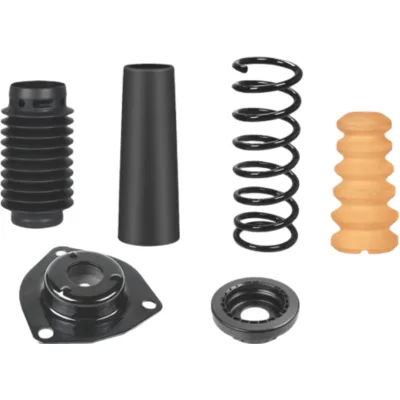


Comprehensive Sourcing Guide
Strategic Sourcing Guide for Gas-Filled Front Shock Absorbers
Understanding Core Technical Specifications and Variability
When sourcing gas-filled front shock absorbers, buyers must navigate a landscape of specific technical parameters that define performance and compatibility. The product category is characterized by a double-cylinder structure, which is a common design for managing damping forces in both compression and rebound phases. This bidirectional damping force capability is critical for maintaining vehicle stability and ride comfort under varying road conditions. The internal mechanism relies on a coil spring configuration, which works in tandem with the gas-filled chamber to provide the necessary resistance against vertical movement.
The physical dimensions of these components vary significantly depending on the specific application and vehicle model. For instance, the diameter of the cylinder is a primary identifier, with observed specifications ranging from 12 mm to 54 mm in the current market data. Similarly, the piston diameter, which directly influences the surface area available for hydraulic pressure generation, shows a range from 12 mm to 25 mm. These dimensional variances are not arbitrary; they correspond to specific working strokes. Buyers will encounter working stroke lengths that vary between 331 mm and 644 mm, often presented as a pair of values (e.g., 331/521 mm or 422/644 mm) to denote the extension and compression limits.
The structural shape of the shock absorber also plays a role in installation compatibility. The market data indicates shapes designated as "I/X" or "I/O," which refer to the mounting geometry and the arrangement of the internal components. Furthermore, the net weight of these units is a logistical factor, with observed values ranging from 2 kg to 3.6 kg per unit. Understanding these exact specifications is the first step in ensuring that the procured parts fit the intended vehicle architecture without requiring modification.
Compliance, Certification, and Standard Verification
In the automotive aftermarket and original equipment supply chain, compliance is non-negotiable. The primary certification observed in the current product data is IATF 16949. This standard is the global benchmark for quality management systems in the automotive industry. Procurement teams must verify that any supplier claiming to manufacture gas-filled front shock absorbers holds this certification, as it ensures that the production processes adhere to rigorous defect prevention and continuous improvement protocols.
Beyond general quality management, specific product standards define the physical and performance boundaries of the shock absorbers. The data references standard codes such as 230190416-606, 174174526-699, and 6565464-565. These codes likely represent a combination of dimensional constraints and performance tolerances specific to different vehicle platforms. Buyers should not assume that a single standard applies to all units; rather, each model number, such as 3110212 or 4011032, corresponds to a specific standard configuration.
The origin of the product is another critical compliance factor. The supplied data points to Zhejiang as the production origin for these components. While this does not inherently dictate quality, it provides a geographical baseline for logistics and regulatory compliance. Buyers must ensure that the supplier can provide documentation proving that the manufacturing facility operates within the claimed jurisdiction and adheres to local and international export regulations. Additionally, the presence of specific aftermarket and ATAP numbers (e.g., 118ID908, 35425021f) serves as a traceability mechanism. These numbers link the generic product to specific vehicle part numbers, ensuring that the replacement part is an exact functional equivalent.
Cost Drivers and Pricing Dynamics
The pricing structure for gas-filled front shock absorbers is influenced by a complex interplay of material costs, manufacturing complexity, and order volume. The observed price range in the market spans from 1 USD to 580 USD. This wide variance is not indicative of a single product type but rather reflects the diversity in specifications, such as cylinder diameter, piston size, and working stroke. A unit with a 54 mm cylinder and a 331 mm stroke will naturally command a different price point than a unit with a 12 mm cylinder and a 644 mm stroke.
Material costs are a significant driver, with steel being the primary material for the spring and body. The quality of the steel, the precision of the machining, and the type of gas filling process all contribute to the final cost. High-performance units that require tighter tolerances on the piston diameter or more advanced damping force characteristics will be priced at the higher end of the spectrum.
Order volume is perhaps the most immediate factor affecting the unit price. The Minimum Order Quantity (MOQ) for these products typically starts at 100 pieces, though some listings indicate a range from 1 to 200 pieces. Suppliers often structure their pricing tiers to reward larger orders, meaning that the cost per unit will decrease as the order quantity increases beyond the MOQ. Buyers should be aware that the "1 USD" price point likely represents a very specific, low-specification item or a promotional entry-level price, while the "580 USD" figure likely represents a high-volume or highly specialized unit. Negotiating the price requires a clear understanding of the specific model number and the required quantity.
Typical Applications and Performance Requirements
Gas-filled front shock absorbers are designed to handle the dynamic loads encountered during vehicle operation. The performance metrics provided in the data highlight the specific force ranges these components must manage. The shock pressure absorber capacity is listed at 3000 Newtons, indicating the maximum force the unit can absorb during a high-impact event. The compression resistance ranges from 200 to 1000 Newtons, while the recovery resistance (rebound) ranges from 1000 to 2000 Newtons. These figures define the damping curve of the shock absorber, ensuring that the vehicle returns to a stable state quickly after a bump without oscillating excessively.
The ultimate load capacity is specified at 2000 Newtons, which is a critical safety threshold. This value represents the maximum static or dynamic load the shock absorber can support without structural failure. The working pressure, ranging from 200 to 2000 Newtons, further defines the operational envelope within which the gas-filled mechanism functions correctly. These performance parameters are essential for ensuring that the shock absorber can handle the specific weight and usage patterns of the target vehicle, whether it is a light passenger car or a heavier commercial vehicle.
The position of the shock absorber is explicitly identified as "Front," which dictates the specific mounting points and the direction of force application. Front shock absorbers must manage the weight transfer that occurs during acceleration and braking, as well as the lateral forces during cornering. The specific model numbers, such as 3083007 or 4110232, are matched to these front-position requirements, ensuring that the damping characteristics align with the vehicle's front suspension geometry.
Supplier Evaluation and Lead Time Management
Selecting a reliable supplier is as important as selecting the correct part. The lead time for these products is a critical factor in supply chain planning. The observed delivery time ranges from 45 to 60 days. This duration includes manufacturing, quality control, and logistics. Buyers must account for this lead time when planning inventory levels to avoid stockouts. A supplier who consistently meets the 45-day window is preferable to one who frequently exceeds it, as delays can disrupt production schedules or aftermarket distribution.
The packaging of the product is another area for supplier evaluation. The data lists options such as box packing, carton, and pallet, with the final arrangement often being "to be negotiated." This flexibility allows buyers to optimize shipping costs and protect the product during transit. However, the supplier must demonstrate the ability to handle these packaging requirements consistently. The net weight of the product, ranging from 2 kg to 3.6 kg, influences the shipping cost and the number of units that can be palletized.
When evaluating a supplier, buyers should verify their ability to provide the specific model numbers and ATAP numbers required. The presence of multiple model numbers in the data (e.g., 3110212, 3083007, 4110232) suggests that a capable supplier should have a diverse inventory or the manufacturing flexibility to produce these variations. The supplier's location in Zhejiang should be verified to ensure that they have the necessary infrastructure to support the claimed lead times and quality standards.
Quality Control and Long-Term Procurement Considerations
Quality control in the manufacturing of gas-filled front shock absorbers must be rigorous to prevent premature failure. The IATF 16949 certification is a strong indicator of a supplier's commitment to quality, but buyers should also request specific test results related to the damping force and pressure ratings. The observed ranges for compression and recovery resistance must be verified through testing to ensure that the product performs as advertised.
Long-term procurement considerations involve building a relationship with a supplier who can provide consistent quality over time. The variability in specifications, such as the different cylinder diameters and working strokes, means that the buyer must maintain a clear and updated list of requirements. The use of specific standard codes (e.g., 230190416-606) should be documented to ensure that future orders match the original specifications.
Buyers should also consider the packaging and shipping logistics as part of the long-term strategy. The ability to negotiate packaging options can lead to significant cost savings over time. Additionally, the lead time of 45 to 60 days should be factored into the inventory management system to ensure a steady supply of parts. By focusing on suppliers who can meet these long-term requirements, buyers can ensure the reliability of their supply chain and the safety of the vehicles equipped with these shock absorbers.
Comparative Analysis of Key Specifications
To assist buyers in distinguishing between different product options, the following table summarizes the key technical variations observed in the market data. This comparison highlights the diversity in dimensions and performance metrics that must be matched to specific vehicle requirements.
| Product Model | Cylinder Diameter (mm) | Piston Diameter (mm) | Working Stroke (mm) | Net Weight (kg) | Standard Code |
|---|---|---|---|---|---|
| 3110212 | 54 | 25 | 331/521 | 2.7 | 230190416-606 |
| 3083007 | 51 | 22 | 425/598 | 3.6 | 174174526-699 |
| 4110232 | 15 | 15 | 365/461 | 2.0 | 6565464-565 |
| 3080758 | 38 | 12 | 422/644 | 2.0 | 200200465-637 |
| 4011032 | N/A | 12 | N/A | N/A | 140140508-730 |
Note: Some specifications in the source data were incomplete or varied by model. Buyers must verify the exact dimensions for their specific application.
This table serves as a reference for the significant differences in physical characteristics. The variation in cylinder diameter from 12 mm to 54 mm and piston diameter from 12 mm to 25 mm underscores the need for precise matching. The working stroke, which determines the range of motion, varies from 365 mm to 644 mm, further emphasizing the importance of accurate specification selection. By using this comparative data, buyers can make informed decisions that align with their specific vehicle needs and performance requirements.
FAQs
What certification do these shock absorbers hold?
These gas filled front shock absorbers hold IATF16949 certification. This standard ensures the manufacturing facility adheres to rigorous automotive quality management protocols for defect prevention and continuous improvement.
How long is the delivery time for these units?
The delivery time ranges from 45 to 60 days. This duration covers the manufacturing process, quality control checks, and logistics required to ship the units from the Zhejiang origin.
Which specifications define the cylinder dimensions?
The cylinder diameter varies from 12 mm to 54 mm depending on the model. Specific models like 3110212 feature a 54 mm diameter, while others like 3080758 have a 38 mm diameter.
Can I customize the order quantity for these parts?
Customization is available for these gas filled front shock absorbers. The minimum order quantity typically starts at 100 pieces, though some listings may allow quantities between 1 and 200 pieces.
What is the working stroke range for these shocks?
The working stroke ranges from 331 mm to 644 mm. Specific models show pairs like 331/521 mm or 422/644 mm to denote extension and compression limits for different vehicle applications.
Where are these shock absorbers manufactured?
These components originate from Zhejiang. This geographical location serves as the baseline for logistics and regulatory compliance when sourcing these gas filled front shock absorbers.